Long Leg Master is a physics‑based arcade walking game featuring a character with extremely long, unstable legs. Your goal is to control this long-legged figure to walk as far as possible without falling. This is absolutely a tough mission due to the character's awkward physics, making balancing its movements extremely challenging.
In Long Leg Master, you control a character with exceptionally long legs, navigating the environment while striving to maintain your balance. This core mechanic transforms every single step into a grueling challenge.
Briefly, you may find walking has never been this hard. Take one or a few steps forward, and you'll see your character fall again and again. What a frustrating experience! But luckily, with practice and timing mastery, you will gradually improve your balance and walk farther and farther.
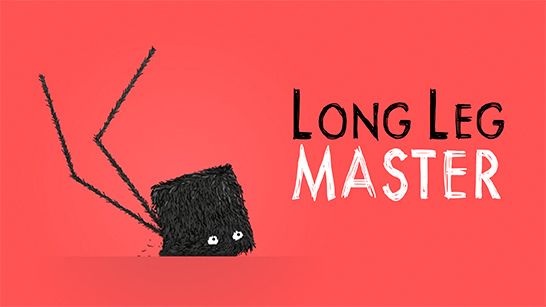
The protagonist in Long Leg Master features an incredibly bizarre and humorous design. Their entire torso consists merely of a small, black square block, yet it is attached to a pair of extremely long, slender, stick-like legs resembling two walking canes.
These disproportionately long legs render every movement the character makes wobbly and unstable. Each step looks incredibly clumsy, creating a comical effect as the character stumbles and struggles to keep their balance. A single misplaced step can send the character tumbling to the ground in the most hilarious ways imaginable.
In Long Leg Master, players control the character as they walk using their super-long, stick-thin legs.
Unlike conventional games where characters move continuously, here you must advance one foot at a time with great care to avoid losing your balance.
With every mouse click, one leg is lifted and placed forward to take a new step. Players must carefully judge the distance and rhythm of their steps to ensure the character's body does not tilt too far to one side. If the center of gravity shifts off-center or a step is taken too forcefully, the character will immediately fall over.
Taking short steps helps the character remain more stable and makes it easier to regain balance after each stride. If you place a foot too far ahead, the character is prone to being pulled off-center and falling instantly.
If the character's body begins to lean heavily to one side, quickly plant the other foot down to re-center their weight.
Instead of frantically spamming inputs, maintain a steady and consistent rhythm to ensure better control.
Watch the body, not just the feet. The legs can look chaotic and hard to control, but your character's body tilt tells you when you're approaching danger.
If the character starts to wobble, avoid making rapid, continuous inputs. Instead, make small, precise adjustments with each step to guide the body back to a state of equilibrium.
Want similar, but a bit easier, challenges? Then Wacky Steps is definitely worth a try, too.